
Quick verdict
Path Robotics Review 2026: Autonomous AI Welding Cells for Steel Fabrication
Updated October 13, 2026 – Tested Intelligence
Quick verdict: Path Robotics builds welding cells that scan the part in front of them, work out the weld themselves, and adapt when the next part does not match the last one – no robot programmer teaching every seam. The AW-3 handles large parts up to 70 feet long, the AF-1 picks, fits and welds small parts on its own, and the whole thing is sold as Robots-as-a-Service. Pricing is not public. For fab shops losing work to the welder shortage, this is one of the most serious answers on the market.
What it is
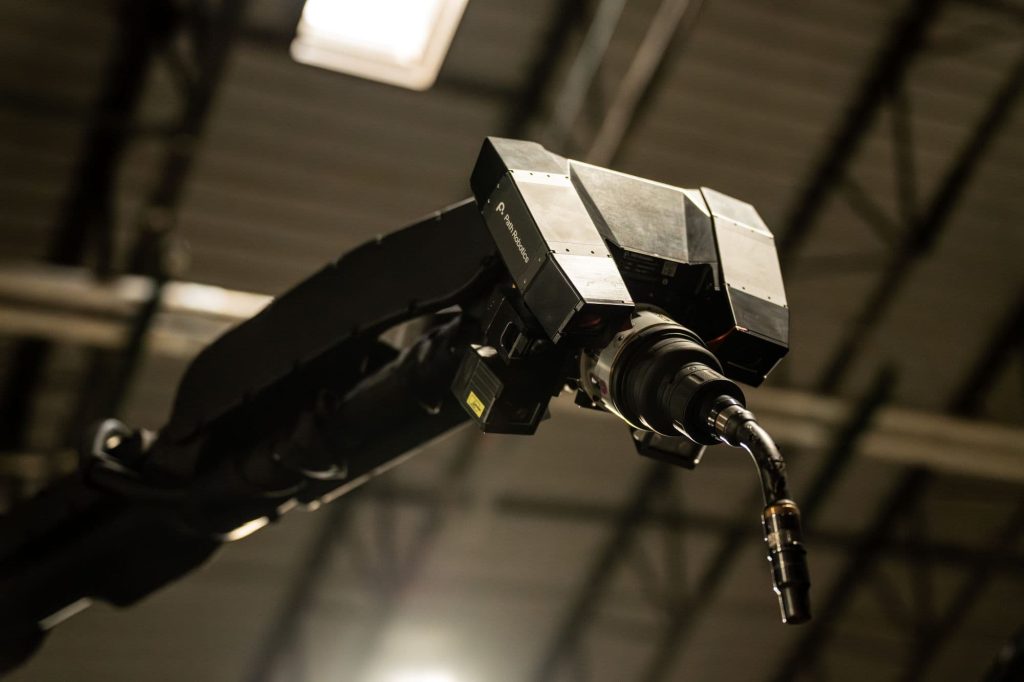
Path Robotics is a Columbus, Ohio company building autonomous welding systems around its Obsidian physical AI model, computer vision and machine learning. Traditional welding robots only earn their keep on identical, perfectly fixtured parts – which is why structural and heavy fabrication, where every assembly differs a little, mostly stayed manual. Path’s cells perceive the actual part, compare it to the model, and adjust, so high-mix work becomes automatable.
Two cells are in the market. The AW-3 handles large parts, up to 70 feet long. The AF-1 goes further: it autonomously picks, fit-ups and welds small parts – load raw components, press go, and come back to a batch of welded parts, with cells running autonomously for hours. Both are deployed in fabrication shops across the US and Canada, and The Fabricator and The Robot Report have covered the systems and the company’s $100 million Series D raise.
Key features
- Obsidian physical AI model with vision and machine learning driving the weld
- AW-3 cell for large parts, up to 70 feet long
- AF-1 cell that picks, fits up and welds small parts without human intervention
- Scans each part and adapts to part-to-part variation instead of following a fixed taught program
- Built for high-mix, multi-pass welding where traditional automation falls down
- Robots-as-a-Service model, with 24/7 Mission Control production assistance (vendor description)
- No robot programmer needed to teach every new part
Pricing
Pricing is not public. Path sells through a Robots-as-a-Service model rather than an equipment price tag, so expect a scoped proposal based on the cell, your parts and your throughput. Price it against the work you turn away or farm out for lack of welders – that, not a welder’s hourly rate alone, is the comparison Path is built to win.
Who it’s for
Fabrication shops – structural, heavy equipment, trailer, energy and similar steel work – with high-mix parts, real volume, and a welder shortage costing them jobs. The AW-3 suits assemblies too big for conventional cells; the AF-1 suits batch small-part work that ties up your best fitters and welders.
Who should skip it
Field and erection work: these are fixed shop cells, and Path’s mobile Rove system is not commercially available until early 2027, early adopters only. Also skip it if your welding is occasional, or you have no steady flow of parts to keep a cell productive.
Pros
- Handles part variation, the thing that killed traditional robot welding in steel shops
- AW-3’s 70-foot envelope fits genuinely large fabrications
- AF-1 removes fit-up labour as well as welding labour on small parts
- RaaS model with round-the-clock production support lowers the in-house expertise barrier
Cons
- No public pricing; RaaS proposal only
- Fixed cells – nothing here welds out on the structure today
- Needs steady part volume to justify itself
- Your shop still owns prep, material flow and quality sign-off
FAQ
What is the difference between the AW-3 and the AF-1?
The AW-3 is the large-part cell, handling parts up to 70 feet long. The AF-1 is the autonomous fit-up cell: it picks, fits and welds small parts itself, running batches unattended for hours.
How much does Path Robotics cost?
Pricing is not public. Path sells its cells as Robots-as-a-Service, quoted per deployment, with its Mission Control production assistance included in that model.
Can Path weld parts that do not match the drawing exactly?
That is the core claim: the cells scan each part, compare it to the model and adapt the weld to real-world variation, rather than demanding the perfect fit-up a traditional taught robot needs.
Bottom line
Path Robotics is autonomous welding aimed at the work steel shops actually get: big, variable, high-mix parts and not enough welders. If that is your shop, the AW-3 and AF-1 deserve a serious look – just know the price comes as a proposal, not a price list.