
October 10, 2026 — AI News desk
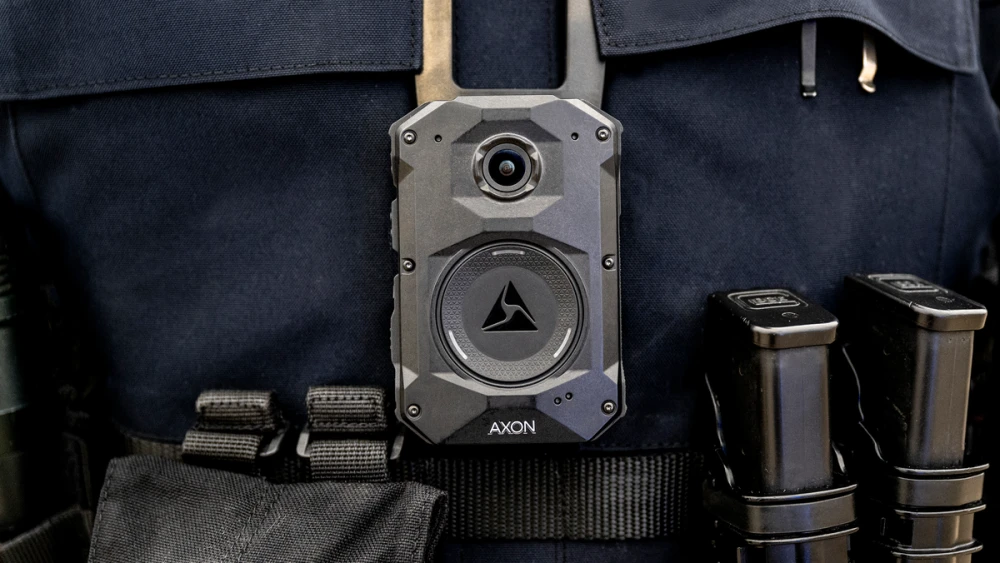
The short version: Lakeland, Florida’s city commission voted this week to approve a 10-year, $21.9 million contract with Axon Enterprises — and the bundle includes Draft One, Axon’s AI tool that turns body-camera audio into written police reports. The deal is one of the most significant deployments of generative AI in U.S. policing to date.
What the deal covers
The contract, approved unanimously on October 5, replaces and expands the police department’s 2021 Axon agreement at nearly double the price. Beyond body cameras, in-car video, and TASER 10 devices, it adds:
- Axon Draft One: AI report-writing software that listens to body-worn camera audio and produces a first-draft incident narrative for the officer to review.
- Axon Air: a drone-as-first-responder program that can launch remotely to a 911 call ahead of arriving officers.
- Real-time translation in more than 50 languages, a real-time crime center integrating public and private camera feeds, and AI assistance for 911 dispatchers.
The city plans to offset much of the cost with grants, including about $4 million from a Florida Department of Law Enforcement program and $855,000 from Homeland Security, alongside a pending federal grant.
How Draft One works — and why it is controversial
The tool transcribes and summarizes body-camera conversations, then drafts the incident narrative. Officers are required to certify the report as accurate, but in practice that can be as simple as clicking a button. And AI systems occasionally make things up: in one widely reported incident in Utah, Draft One drafted a report saying an officer had transformed into a frog — the body camera had picked up the movie playing in the background.
The deeper issue is transparency. Florida does not require police to disclose which reports were written with AI, and Axon does not store the original draft. An Axon product manager described that choice as deliberate, saying the company did not want to “create more disclosure headaches” for customers and their attorneys’ offices. Civil liberties advocates counter that this makes it harder to challenge reports in court — defense attorneys can question the credibility of AI-generated narratives, potentially making cases harder to prosecute.
Why it matters
The “everything AI, tested” take: report-writing is genuinely tedious, and AI drafts that an officer carefully reviews could save serious time. But a police report is a legal document, and the product here is designed to leave no paper trail of what the AI changed or invented. The value proposition for a department is speed; the risk is that reports become harder to audit and easier to challenge. Watch whether other departments follow Lakeland’s lead — and whether legislatures start requiring disclosure of AI-written police reports, as a growing number of civil liberties groups are now pushing for.
Frequently asked questions
Is the Lakeland deal final? Yes — the city commission voted unanimously on October 5 to approve the 10-year, $21.9 million Master Services and Purchasing Agreement with Axon, with rollout beginning in the current fiscal year.
Do officers have to disclose that AI wrote the report? In Florida, no. Police departments are not required to disclose which reports used AI assistance, and Axon’s tool does not store the original draft.
Is Lakeland the first to use Draft One? No — the tool is already in use by other agencies, including the Hillsborough County Sheriff’s Office. But the scale of this contract makes it a notable milestone for AI in policing.
Sources: The Ledger, WMNF (NPR member station), Lakeland Gazette, DroneXL.