
Quick verdict
Butterfly iQ+ Review 2026: Whole-Body Ultrasound in Your Pocket
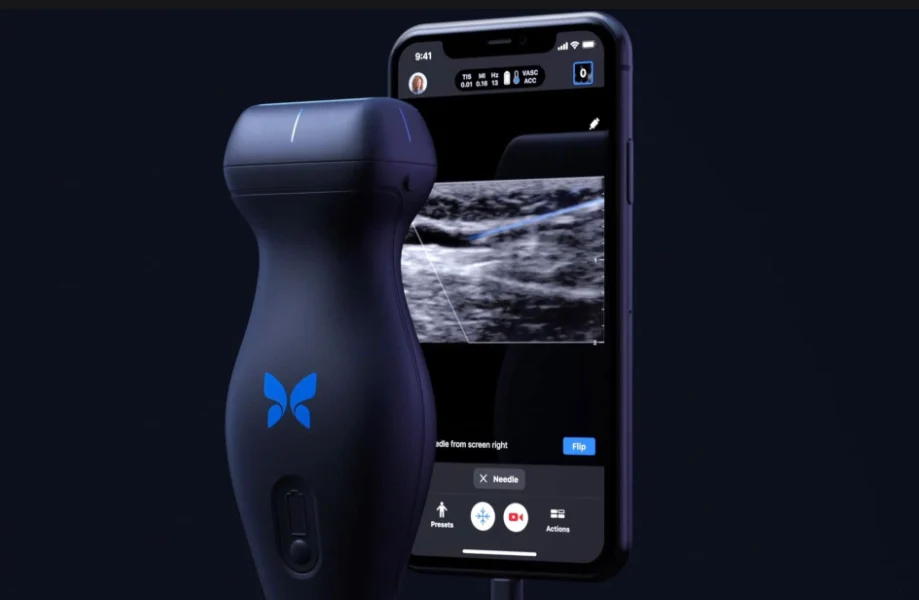
TL;DR: The Butterfly iQ+ is a handheld ultrasound probe that plugs into an iPhone or Android phone and performs whole-body imaging from a single device — cardiac, abdominal, lung, musculoskeletal, vascular, and more. Based on specs, pricing, and published reviews, it’s a genuine clinical tool at roughly $1,999 plus an annual membership, with AI helpers like a four-second automatic bladder volume calculation.
One important clarification before anything else: this is not a consumer gadget you buy to check yourself at home. Butterfly Network sells it to trained healthcare providers — doctors, nurses, midwives, physiotherapists, and other ultrasound-trained clinicians — and getting a safe, useful scan depends on training, not just the hardware. If you were hoping for a home ultrasound device, this isn’t it.
Key features
- Single-probe whole-body imaging: Butterfly’s patented Ultrasound-on-Chip technology replaces multiple traditional transducers with one handheld probe. Instead of swapping probes for different exams, you pick from 22 presets with a swipe in the app and start scanning.
- AI-assisted tools: The app includes AI-based Auto Bladder Volume, which calculates bladder volume automatically in about four seconds, plus image-guidance features designed to help users acquire usable images. These are assists for trained users, not self-diagnosis tools.
- Needle Viz: A dedicated needle-visualization technology that improves needle visibility during guided procedures like central line placements and nerve blocks.
- Built for clinical shifts: Butterfly says the iQ+ extends battery life by 20% and scanning time by 100% over the original iQ, and the anodized aluminum body is rated for a 4-foot drop, with a replaceable compression- and stomp-tested cable.
- Connected workflow: Images go to HIPAA-compliant cloud storage through the Butterfly app, with membership tiers covering sharing, telemedicine, and EHR integration depending on the plan.
Who it’s for
The Butterfly iQ+ is for healthcare professionals and facilities that need portable point-of-care ultrasound without the cost and bulk of a cart-based machine. NICE’s medical technology briefing lists its use across emergency medicine, critical care, anesthesiology, primary care, and even veterinary and global-health settings where traditional imaging isn’t available. It’s a strong fit for urgent care clinics, rural practices, sports medicine teams, and hospitals expanding bedside ultrasound.
It is not for consumers, wellness hobbyists, or anyone planning to scan themselves or family members. Ultrasound imaging is a diagnostic procedure: image quality depends on technique, and interpreting images requires clinical training. Butterfly itself includes roughly an hour of operation training with purchase, aimed at ultrasound-trained providers.
What to watch out for
The headline price is only part of the story. The iQ+ launched at $1,999, but it requires a paid Butterfly membership on top — NICE lists the UK figure as £360 per year for the Pro Individual plan covering unlimited cloud storage, with higher tiers available for teams and enterprise features. Factor the ongoing subscription into any purchasing decision.
Also know that the iQ+ is now the previous generation. Butterfly launched the iQ3 in February 2024 at $3,899 plus membership, with a smaller probe face, faster charging, and improved image quality. If you’re buying new in 2026, check whether discounted iQ+ stock or the current iQ3 makes more sense for your needs — this review covers the iQ+ specifically.
Finally, experts have raised reasonable caveats about handheld ultrasound in general: images are viewed on a smartphone screen rather than a full cart display, and NICE noted that the comparative evidence base for the iQ+ was limited at the time of its briefing. It’s a screening and bedside tool, not a replacement for formal radiology ultrasound.
Pros and cons
Pros:
- One probe covers whole-body imaging — no cart, no probe swaps
- Dramatically cheaper than traditional point-of-care ($6,000–$19,500) or cart-based ($30,000–$100,000) ultrasound
- Useful AI assists like auto bladder volume and image-guidance features
- Rugged build with strong battery and replaceable cable
- Cloud-connected sharing and telemedicine workflow built in
Cons:
- Professional-only: requires clinical training to use safely and meaningfully
- Ongoing membership subscription on top of the purchase price
- Superseded by the iQ3 for new buyers in 2026
- Smartphone-sized images; not a substitute for formal radiology imaging
Frequently asked questions
Can I buy the Butterfly iQ+ for home use?
No — and you shouldn’t try. It’s a prescription-class clinical device sold to healthcare providers, and safe use requires ultrasound training. If you’re a patient, ask your doctor about point-of-care ultrasound rather than buying the hardware.
How much does the Butterfly iQ+ cost?
The device launched at $1,999 plus an annual membership (about £360/year in the UK for the individual plan). Membership tiers vary by features like storage, telemedicine, and EHR integration.
What’s the difference between the Butterfly iQ+ and the iQ3?
The iQ3, launched in 2024 at $3,899, is the current generation with a smaller, lighter probe, faster charging, and better image quality. The iQ+ remains a capable device, particularly at discounted prices.
Does it work with my phone?
The iQ+ connects to both iOS and Android through the Butterfly app, but only to listed compatible devices — check Butterfly’s compatibility list before buying.
Is the AI in the Butterfly iQ+ a diagnosis tool?
No. Its AI tools assist with image acquisition and measurements like bladder volume. Diagnosis still rests with the clinician.
Price and availability
The Butterfly iQ+ is sold through Butterfly Network’s own store, not on Amazon — so there is no Amazon link in this review. Expect to pay around $1,999 for the probe plus an annual membership, and check whether the newer iQ3 suits your needs before buying.