
Quick verdict
Dexcom Stelo Review 2026: The First OTC Continuous Glucose Biosensor
The Dexcom Stelo is the first continuous glucose monitor cleared by the FDA for over-the-counter sale in the US — no prescription, no insurance paperwork, no doctor visit required. For about $99 a month, anyone eighteen or older who is not on insulin gets a sensor that tracks glucose around the clock for up to fifteen days per wear. Based on specs, pricing, and published reviews, Stelo is the most accessible CGM ever made, and the obvious pick for curious non-diabetics and people managing type 2 diabetes without insulin.
Key features
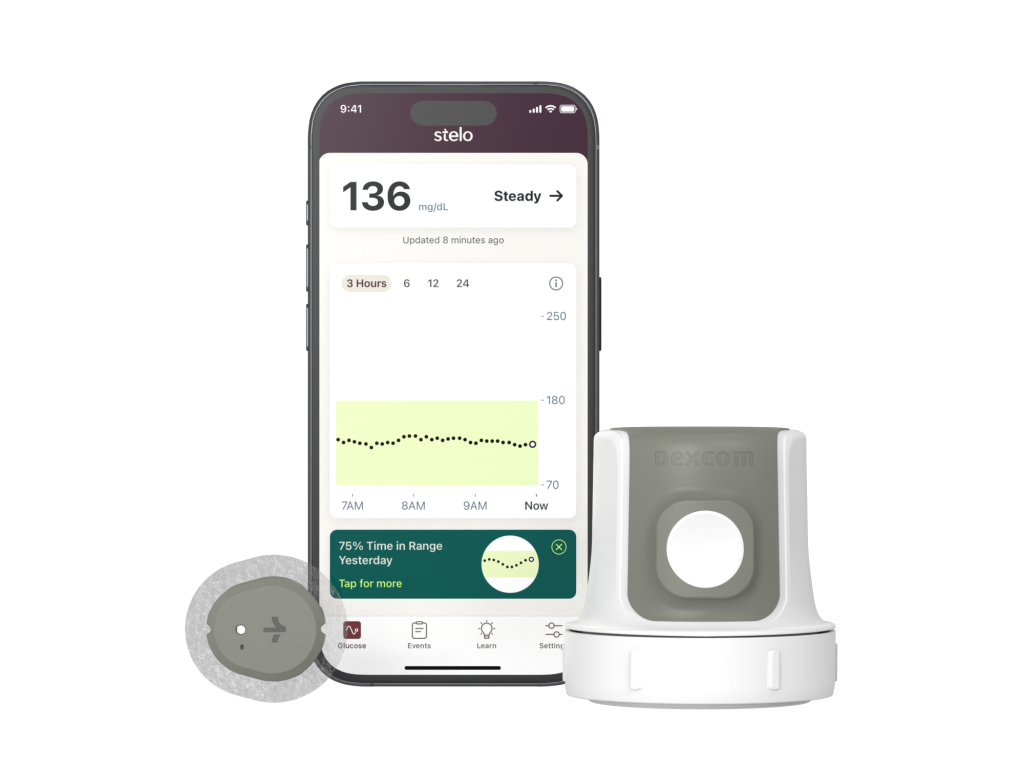
Stelo’s sensor is a small, flexible wire inserted just under the skin on the back of your upper arm with a one-press applicator. Each sensor wears for up to fifteen days, plus a twelve-hour grace period, and streams glucose readings to the Stelo app over Bluetooth — so a two-sensor pack covers a full month. Reviewers describe the application as nearly painless, and once it is on, most people forget it is there.
The app is where Stelo differentiates itself from prescription CGMs. Readings stream continuously into clean trend graphs, so you can see exactly how a meal, a workout, a bad night of sleep, or a stressful afternoon moves your glucose. Dexcom has added AI-powered features including Smart Food Logging, backed by a database of more than one million foods, with text search, barcode scanning, and photo logging — the app ties what you eat to how your glucose responds and surfaces patterns you would never catch with finger pricks.
The Stelo app runs on iPhone (iOS 16.2 or newer) and Android (12 or newer), and readings can be shared with your doctor. The product is FSA and HSA eligible, and it has become a top seller in its category on Amazon, where it holds the number-one spot among blood glucose monitors.
Who it’s for
Adults with type 2 diabetes who do not use insulin, people with prediabetes tracking whether lifestyle changes are working, and health-curious non-diabetics who want to see how food, exercise, sleep, and stress affect their glucose in real time. It is built for exactly the people traditional CGMs locked out: those who could never get a prescription or afford insurance-priced devices.
It is also a low-friction way to answer a specific question — “does pasta spike me?” or “is my morning routine keeping glucose steady?” — with a month or two of data rather than a lifetime commitment.
What to watch out for
Stelo is not a medical CGM and must not be used like one. It is indicated only for adults eighteen and older who are not on insulin. If you have problematic hypoglycemia (low blood sugar), are on dialysis, or use insulin, this is not your device — prescription CGMs like Dexcom’s G7 exist for that purpose, with the urgent low-glucose alerts Stelo lacks. Do not change medication based on Stelo readings without talking to your healthcare provider, and the sensor is MR unsafe, so it must be removed before MRI or CT scans.
Set expectations on accuracy too. Consumer CGMs measure glucose in interstitial fluid, which lags behind blood glucose, and reviewers note occasional erratic readings — especially in the first day of wear and overnight. Treat trends as the product, not any single number.
Finally, the cost is ongoing. Each two-sensor pack covers about a month, so this is a subscription-style expense, not a one-time gadget purchase. The monthly subscription brings the price to $89 a month, and sensors are consumable — skip a month and the data stops.
Pros and cons
Pros:
- First FDA-cleared OTC CGM — no prescription or insurance needed
- Up to fifteen days of wear per sensor with a twelve-hour grace period
- Excellent app with trend graphs and AI-powered Smart Food Logging
- FSA/HSA eligible; nearly painless one-press application
- Reveals how meals, sleep, exercise, and stress move your glucose
Cons:
- Not for insulin users, problematic hypoglycemia, or dialysis patients
- No urgent low-glucose alerts like medical-grade CGMs
- Readings lag blood glucose; occasional erratic values reported
- Ongoing cost — sensors are consumable, data stops if you stop buying
- MR unsafe; must be removed before MRI or CT scans
FAQs
Do I need a prescription for the Dexcom Stelo?
No. Stelo is the first continuous glucose monitor cleared by the FDA for over-the-counter sale, so anyone eighteen or older who is not on insulin can buy it directly.
How much does the Dexcom Stelo cost?
A one-time two-sensor pack costs $99, covering up to thirty days. A monthly subscription lowers the price to $89 per month with two sensors delivered every thirty days.
How long does each Stelo sensor last?
Each sensor wears for up to fifteen days, plus a twelve-hour grace period, so two sensors cover a full month.
Can people with type 1 diabetes or insulin users use Stelo?
No. Stelo is indicated only for adults not on insulin. Insulin users and people with problematic hypoglycemia need a medical-grade CGM with urgent low alerts.
Is the Stelo sensor painful to apply?
Reviewers consistently describe the one-press applicator as nearly painless — most report barely feeling a prick, and the worn sensor is easy to forget about.
Price and availability
Stelo sells direct from Dexcom and through major retailers including Amazon. A one-time two-sensor pack is $99; the monthly subscription is $89 per month. It is FSA/HSA eligible.
Check price on Amazon
As an Amazon Associate we earn from qualifying purchases.