
North Korea Claims Its Latest Missile Is AI-Guided — and Designed to Evade Missile Defenses
Saturday, October 3, 2026 — Seoul
What happened
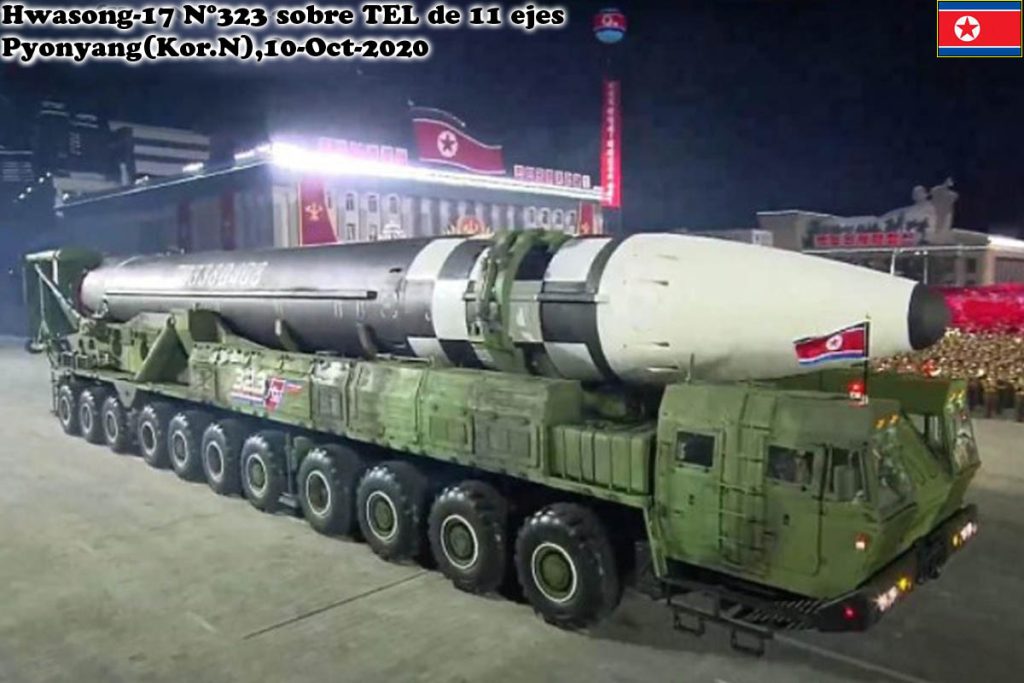
North Korea said Saturday it test-fired an intermediate-range ballistic missile that it claims has maneuverable flight capabilities designed to evade missile defenses in South Korea and Japan, according to the Associated Press and Reuters.
Kim Yo Jong, the powerful sister of North Korean leader Kim Jong Un, said her brother supervised the test and described the missile as “strategic” — implying it was designed to deliver nuclear weapons. The South Korean military said earlier Saturday that the missile flew more than 700 kilometers (435 miles) toward the sea off the country’s east coast. Japan’s military said the missile landed in waters outside its exclusive economic zone.
The AI claim
Kim Yo Jong said the missile could change its flight orbit at low altitudes and that artificial intelligence technology had been applied to it, making interception extremely difficult. “In other words, this means that there is no way to avoid this attack,” she said, per KCNA via Reuters. She offered no evidence for the claim, and the South Korean military — which often accuses Pyongyang of exaggerating its capabilities — did not immediately comment on it.
The launch came amid heightened tensions over land mine blasts in the demilitarized zone on September 21 that wounded South Korean soldiers; Kim Yo Jong had dismissed Seoul’s demand for an apology the day before the test. North Korea has conducted more than 10 missile tests so far this year.
Why this matters
If genuine, AI-assisted terminal maneuvering would be a meaningful escalation in North Korea’s arsenal — exactly the kind of capability that makes existing missile defenses far less reliable. But “AI” is also a useful buzzword for a regime that has a long track record of inflating its weapons claims, and no outside analyst has yet corroborated that the missile used AI guidance. Treat the trajectory claim (the missile flew; allies tracked it) as solid, and the AI claim as unproven — an important distinction as this gets repeated.
For the broader AI conversation, the story is a reminder that “AI capabilities” is now a line in weapons propaganda, not just in tech marketing. As militaries race to put autonomy into weapons systems, the line between real capability and claimed capability matters enormously — and Saturday’s test is a case study in how hard that line is to verify from the outside.
Quick FAQ
Did North Korea really put AI in a missile? That’s North Korea’s claim, made through KCNA. No independent source has verified it, and Pyongyang has a history of exaggerating weapons capabilities.
How far did the missile fly? More than 700 kilometers (435 miles), according to South Korea’s military, landing east of the Korean peninsula.
Why was the timing significant? The test came a day after Kim Yo Jong rejected Seoul’s demand for an apology over September 21 land mine blasts in the DMZ that wounded South Korean soldiers.
Has North Korea claimed AI weapons before? Pyongyang has described weapons systems with new guidance and maneuverability features this year, but this is among its most explicit claims of AI integration in a missile.
Sources: The Associated Press (via Military.com), Reuters