
Quick verdict
Best AI Wearables 2026: Smartwatches and Rings With Real On-Device AI
The Apple Watch Series 11 is the best AI wearable of 2026 for most people. Its on-device Apple Intelligence powers the Workout Buddy voice coach, and its health sensing – hypertension notifications, sleep apnea alerts, ECG – leads the category. If you use Android instead, the Samsung Galaxy Watch 8 is the clear alternative, while budget and specialist picks below cover runners, recovery tracking, and screen-free smart rings.
Quick comparison
| Product | Standout feature | Best for | Link |
|---|---|---|---|
| Apple Watch Series 11 | Workout Buddy with Apple Intelligence | Most iPhone users | Check price on Amazon |
| Samsung Galaxy Watch 8 | Galaxy AI Energy Score + Gemini on-watch | Android users | Check price on Amazon |
| Google Pixel Watch 4 | Built-in Gemini assistant | Google ecosystem fans | Check price on Amazon |
| Apple Watch Ultra 3 | Satellite emergency texting, 42h battery | Rugged outdoor use | Check price on Amazon |
| Garmin Forerunner 265 | Training readiness + HRV status | Serious runners | Check price on Amazon |
| Amazfit Bip 6 | AI coaching with 14-day battery | Budget buyers | Check price on Amazon |
| WHOOP One | Screenless strain and recovery coaching | Recovery-focused athletes | Check price on Amazon |
| RingConn Gen 2 Smart Ring | Sleep apnea monitoring, no subscription | Screen-free tracking | Check price on Amazon |
1. Apple Watch Series 11 – Best overall AI smartwatch
The Apple Watch Series 11 is the wearable that best delivers on the “AI” promise in 2026. Workout Buddy, powered by Apple Intelligence, gives real-time spoken coaching during workouts, and the watch pairs it with serious health sensing: hypertension notifications, sleep apnea alerts, ECG, blood oxygen, and a nightly sleep score. The S10 SiP drives it all, with 64GB of storage, a 2000-nit Always-On Retina LTPO3 display, 50-meter water resistance, and 24 hours of battery stretching to 38 hours in low power mode. For iPhone owners who want one device that covers fitness coaching, health monitoring, and everyday smart features, this is the default recommendation.
Pros: Workout Buddy AI coaching built in; hypertension and sleep apnea notifications; bright 2000-nit always-on display.
Cons: iPhone required; 24-hour battery lags multi-day rivals.
2. Samsung Galaxy Watch 8 – Best AI smartwatch for Android
Samsung’s answer to Apple’s AI push is the Galaxy Watch 8, built on a 3nm 5-core processor with 2GB of RAM and 32GB of storage. Galaxy AI generates a daily Energy Score from sleep, activity, and heart data, while Running Coach builds adaptive plans and Google Gemini runs directly on the watch for voice assistance. The health stack includes sleep coaching and vascular load tracking, plus an antioxidant index that few competitors attempt. A 3000-nit display, dual-frequency GPS, 5ATM plus IP68 rating, and MIL-STD-810H durability round out a watch that feels a generation ahead of its predecessor. Android users get the deepest AI integration anywhere outside the Apple ecosystem.
Pros: Galaxy AI Energy Score and Running Coach; Gemini on-watch; 3000-nit display with dual-frequency GPS.
Cons: Some features need a Samsung phone; battery life is typical one-day class.
3. Google Pixel Watch 4 – Best for Google and Gemini fans
The Pixel Watch 4 makes Gemini the centerpiece rather than a side feature, with Google’s assistant built directly into Wear OS 6 for hands-free questions, reminders, and workout control. The Actua 360 domed display is 10 percent larger and 50 percent brighter than the previous generation, and the 40-hour battery (72 hours in saver mode, with a 15-minute charge delivering 15 hours) finally silences the battery complaints of earlier Pixels. Dual-frequency GPS, more than 40 exercise modes, and 32GB of storage cover the fitness side. If your digital life runs through Google services, this is the most coherent smartwatch you can buy.
Pros: Gemini built in, not bolted on; 40-hour battery with fast charging; domed display looks and reads great.
Cons: Fewer third-party apps than the Apple Watch; no iPhone support.
4. Apple Watch Ultra 3 – Best rugged AI wearable
For hikers, divers, and endurance athletes in the Apple ecosystem, the Watch Ultra 3 takes everything good about the Series 11 and armors it. Grade 5 titanium, a 3000-nit display, 100-meter water resistance with EN13319 dive certification to 40 meters, MIL-STD 810H testing, and dual-frequency GPS make it the toughest mainstream smartwatch on sale. The 42-hour battery (72 hours in low power) is the longest of any Apple Watch, and satellite emergency texting adds genuine safety off the grid. You still get hypertension, sleep apnea, and irregular rhythm notifications plus the sleep score, so none of the health intelligence is sacrificed for the rugged build.
Pros: Satellite texting for off-grid emergencies; dive-rated and MIL-STD tested; longest Apple Watch battery by far.
Cons: 49mm size overwhelms smaller wrists; premium price for features casual users will not need.
5. Garmin Forerunner 265 – Best for runners
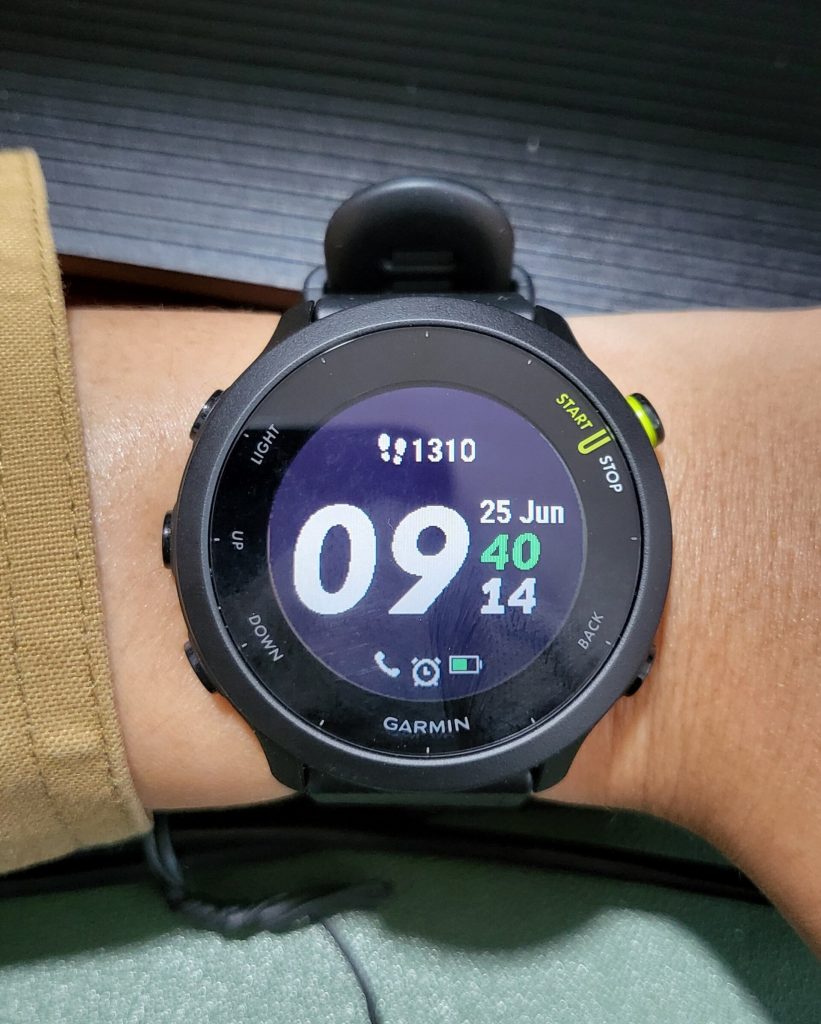
Garmin’s training science is the closest thing wearables have to a true AI coach, and the Forerunner 265 packages it in a lightweight 47-gram watch with a 1.3-inch AMOLED touchscreen. Training readiness and HRV status translate overnight recovery data into a daily “go or rest” recommendation, wrist-based running power and the race widget add race-day intelligence, and multi-band GPS keeps pace data accurate in cities and canyons. With a 13-day smartwatch battery (20 hours of GPS), Garmin Pay, music, and more than 30 activity profiles, it outlasts every flagship smartwatch here by a wide margin. Runners who train by data rather than vibes should shortlist this first.
Pros: Training readiness and HRV status guide daily training; 13-day battery; accurate multi-band GPS.
Cons: Smart features trail Apple and Samsung; no touchscreen-first app ecosystem.
6. Amazfit Bip 6 – Best budget AI smartwatch
The Amazfit Bip 6 is the standout value in AI wearables: a 1.97-inch AMOLED display, built-in GPS with free offline maps, and AI coaching, all at a fraction of flagship prices. The 14-day battery alone embarrasses one-day watches, and the health tracking covers 24/7 heart rate, sleep, SpO2, and stress across more than 140 workout modes, including HYROX-specific training. Bluetooth calls and texts, 5ATM water resistance, and Zepp OS complete a package that has become one of Amazon’s best-selling smartwatches for good reason. If you want AI-guided fitness without the flagship tax, start here.
Pros: AI coaching with 14-day battery; built-in GPS and offline maps; huge 1.97-inch AMOLED display for the price.
Cons: Zepp OS app selection is limited; no on-watch voice assistant at this tier.
7. WHOOP One – Best for recovery and performance coaching
WHOOP takes the opposite approach to every watch here: no screen, no notifications, just 24/7 physiological sensing distilled into sleep, strain, and recovery scores with personalized coaching. The WHOOP One bundle includes a 12-month membership with the 5.0 wearable, which tracks heart rate, HRV, SpO2, skin temperature, VO2 max, muscular load, and women’s hormonal insights. The 14-plus-day battery charges wirelessly via the PowerPack without removing the band. For athletes who want coaching intelligence rather than a smartwatch distraction, the screenless form factor is a feature, not a compromise.
Pros: Deep recovery and strain coaching; 14-plus-day battery; screenless design eliminates distractions.
Cons: Requires an ongoing membership after the included 12 months; no display or smartwatch features.
8. RingConn Gen 2 Smart Ring – Best AI smart ring
If you would rather not wear a watch at all, the RingConn Gen 2 packs serious sensing into a finger. Real-time sleep apnea monitoring with AHI tracking is its headline feature, joined by AI-powered insights drawn from heart rate, HRV, SpO2, stress, and women’s health data. Battery life is exceptional for a ring: 10 to 12 days on the ring itself, plus 150 days with the charging case, all with 100-meter water resistance and no subscription fee. Over-the-air updates keep the firmware improving. For discreet, set-and-forget health tracking with genuinely useful AI analysis, it is the smart ring to beat.
Pros: Sleep apnea monitoring with real-time AHI; no subscription; 10 to 12 day battery plus long-lived charging case.
Cons: No display means phone app is required for all data; sizing kits needed for the right fit.
Frequently asked questions
What makes an AI wearable different from a regular smartwatch?
An AI wearable goes beyond logging data: it interprets it. Features like adaptive coaching plans, readiness scores, sleep analysis with recommendations, and voice assistants that act on health context are what separate AI wearables from watches that simply count steps.
Do AI wearables require a subscription?
Some do. WHOOP’s coaching requires a membership, and Fitbit locks advanced insights behind Premium. But Apple, Samsung, Google, Garmin, Amazfit, and RingConn all include their core AI coaching and health features with the hardware, with no ongoing fee.
Which AI wearable has the best battery life?
Among full smartwatches, the Garmin Forerunner 265 leads with a 13-day battery, followed by the Amazfit Bip 6 at 14 days. The RingConn Gen 2 smart ring lasts 10 to 12 days per charge, and the Apple Watch Ultra 3 offers 42 hours – the longest of any Apple Watch.
Can AI wearables replace a doctor for health monitoring?
No. Features like ECG, sleep apnea notifications, and hypertension alerts are useful early-warning signals, but they are not medical diagnoses. Treat them as prompts to see a healthcare professional, not as substitutes for one.
Should iPhone users consider non-Apple wearables?
Yes, depending on priorities. Garmin and WHOOP work well with iPhones for training and recovery, and the RingConn ring pairs with any phone. But if you want deep integration – calls, messages, Apple Intelligence features – an Apple Watch is the natural fit.
As an Amazon Associate we earn from qualifying purchases.