
Quick verdict
VODA.ai Review 2026: AI Pipe-Risk Ranking for Water Utility Crews
Updated November 25, 2026 – Tested Intelligence
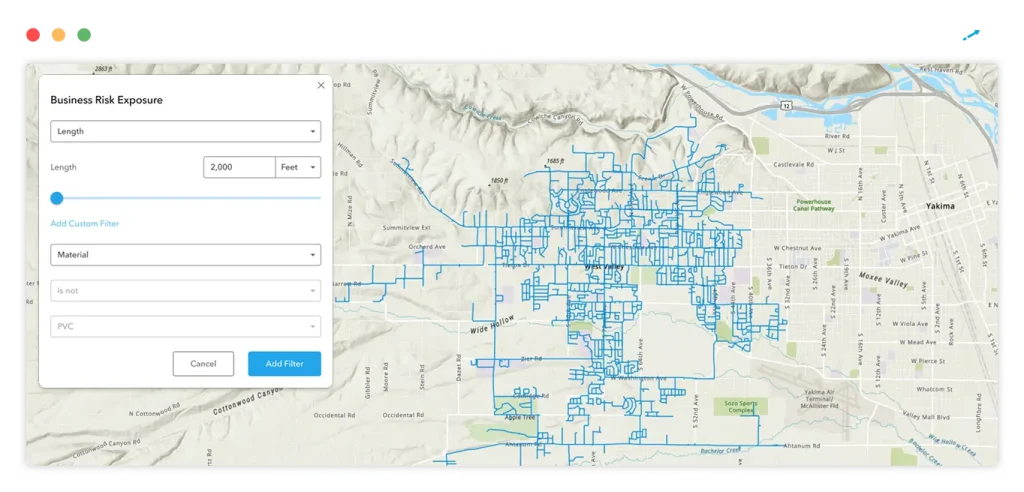
Quick verdict: VODA.ai is decision-support software for water utilities, not a tool for the van. Its daVinci AI engine ranks every pipe segment by likelihood of failure and business risk, so pipe crews, inspectors and capital planners work the highest-risk mains first instead of replacing pipe by age alone. Pricing is custom and not public, and the buyer is the utility — for plumbing and pipe-fitting contractors, the value is knowing where the funded replacement work will land.
What it is
VODA.ai is a Boston-based company founded in 2017, per its own site. Its platform is built around daVinci, an AI engine that performs virtual condition assessments of buried water and wastewater pipe. daVinci analyzes data the utility already holds — GIS, pipe attributes, break history and work orders — plus public data such as soil and weather, and scores each segment for likelihood of failure, consequence and remaining useful life.
The platform also includes an in-software Advisor assistant and lead service line workflows for LCRI compliance. The company says its models have analyzed over 1 million miles of pipe — a vendor figure, stated as such.
Key features
- daVinci AI risk scores: likelihood of failure, consequence, business risk and remaining useful life for every pipe segment, including pipes with no break history
- Capital prioritization: focus replacement and rehabilitation dollars on the highest-risk mains and defer pipe that can safely wait
- Leak and loss targeting: direct leak detection and condition assessment crews to the segments where risk is highest, and flag underperforming meters driving apparent losses
- Lead service line tools: identify likely lead and galvanized lines, prioritize field verification and plan replacement for LCRI workflows
- VODA.ai Advisor: ask questions about the network in the software and get a recommended next action
- Data you already have: starts from existing GIS, break and work-order data — the vendor states utilities do not need perfect data to begin
Pricing
Pricing is not public. VODA.ai states on its own FAQ that pricing is customized by system, data, selected solutions and project scope, and varies by use case — break prediction, capital planning, lead service lines, logger placement, condition assessment or meters.
What the pricing page doesn’t make obvious: a real public price point exists in a city record. A City of Lewisville, Texas memorandum put the first-year cost at $70,785, structured as a five-year annual subscription — one city’s negotiated figure, not a rate card, but a real anchor. The vendor FAQ also sets the timeline plainly: initial outputs are often available within 3 to 6 months, with measurable results typically in 6 to 12 months.
Who it’s for
Water utilities and municipalities — and the pipe contractors who serve them. Asset managers get a defensible replacement list; crews get work aimed at segments most likely to fail in the next 12 months, not the oldest pipe on the map. Contractors bidding utility replacement work should know this platform increasingly decides which streets get funded.
Who should skip it
Residential and commercial plumbing shops should skip it — there is no dispatch, invoicing or customer-facing workflow here. Small systems lacking basic GIS and break records will get limited value until that data exists. Anyone expecting a published price or self-serve trial will find neither.
Pros
- Ranks the whole buried network without digging or camera-ing every segment
- Finds risky pipe with no prior breaks, which age-based plans miss
- Works from data utilities already collect, per the vendor
- Lead service line and LCRI support built into the same platform
- Utility keeps ownership of its data; ISO 27001:2022 compliant
Cons
- No published pricing — every figure comes from a sales process
- Results take months: vendor FAQ puts initial outputs at 3 to 6 months
- Accuracy depends on the quality of the utility’s GIS and break data
- The buyer is the utility, not the contractor who turns the wrench
- Vendor impact figures are company-reported, not independently guaranteed
FAQ
How does VODA.ai predict a main break?
Its daVinci engine trains models on pipe attributes, break history, work orders and public data such as soil and weather, then scores each segment. In Esri’s published Nob Hill Water case, the utility used the rankings to target valve exercising and replacement at mains predicted to fail, including segments with no previous failures.
How much does VODA.ai cost?
Pricing is not public. The one concrete public figure is Lewisville, Texas: $70,785 for the first year of a five-year subscription, per the city’s memorandum. Quotes scale with system size, data readiness and modules.
Is VODA.ai a tool plumbing contractors buy?
Usually no — the utility is the customer. For pipe fitters and utility contractors, VODA.ai matters because its rankings shape which replacement projects get funded. It is a pipeline-of-work signal, not a shop tool.
Bottom line
VODA.ai earns its place by replacing age-and-guesswork pipe replacement with a ranked, defensible risk list for the entire buried network. It is enterprise utility software with enterprise opacity on price and a months-long runway to results — worth understanding if you crew, bid or plan water-main work, and not a product a plumbing shop buys for itself.