
Quick verdict
RodRadar Review 2026: Live Dig Radar in the Bucket That Warns the Operator Before a Strike
Updated November 24, 2026 – Tested Intelligence
Quick verdict: RodRadar’s Live Dig Radar (LDR) is the first excavator bucket with ground-penetrating radar built into it: as the operator digs, embedded AI classifies the radar reflections and alerts the cab in real time when a buried utility is in the next bite, with position and estimated depth. It covers the one moment 811 marks and locators cannot — the dig itself — but purchase pricing is not public, detection depth is limited, and it does not replace locating, marking or potholing.
What it is
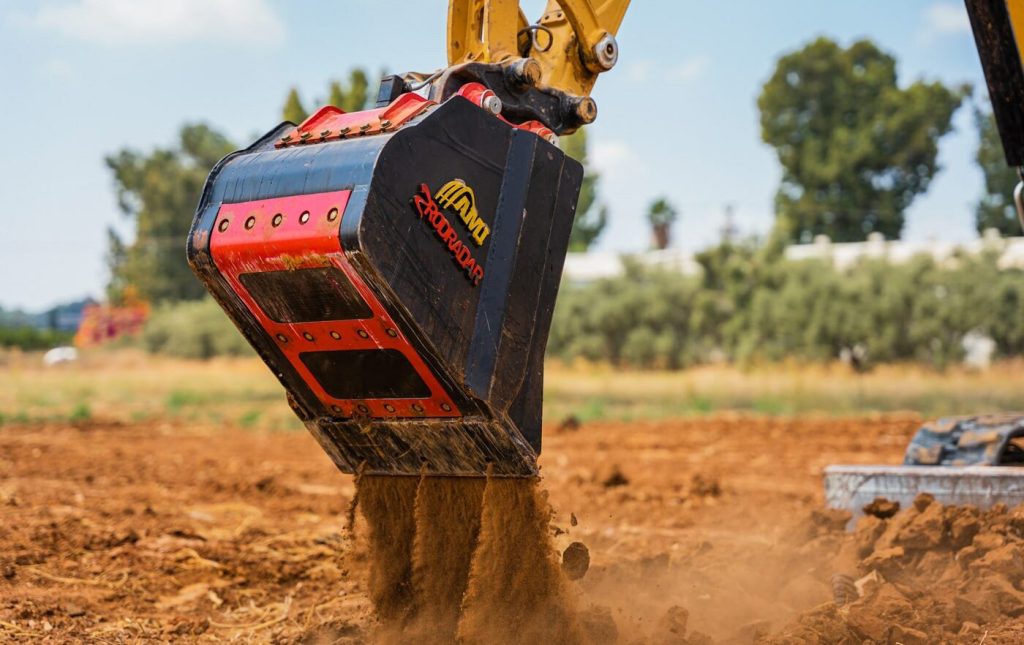
RodRadar, founded in 2013 and based in Rinatya, Israel, built Live Dig Radar to solve a problem operators carry alone: records are old, paint marks fade or sit offset, and once the bucket is in the ground the operator is effectively digging blind around gas, electric, water and fiber lines. LDR moves the sensor into the tool doing the damage. The complete set combines the LDR Excavate bucket with radar antennas and electronics built into the bucket body, the LDR Visualize in-cab display, the LDR Insights cloud portal for detection history and compliance records, and the LDR Capture field app for photos and annotations.
Trade coverage in Equipment World describes the newest step: at ConExpo 2026 RodRadar and Hexagon debuted Stop Before Strike, integrating LDR with Hexagon’s Xwatch hydraulic control so a detected utility can automatically stop the bucket roughly six inches before contact, rather than only warning the operator. Operators retain override capability.
Key features
- Radar in the bucket: 700 MHz ground-penetrating radar antennas in the bucket body scan the ground ahead of each digging pass, in direct contact with the soil
- Embedded AI classification: AI algorithms classify radar reflections in real time during every pass, separating utilities from rocks, roots and other non-utility material
- In-cab alerts: real-time visual and audible warnings on a tablet or mobile device over Wi-Fi, with Low, Medium and High severity, position and estimated depth per detection
- Metallic and non-metallic detection: gas, electric, water and fiber, including PVC, HDPE, plastic and concrete pipe, live or abandoned
- Five bucket types for 1-ton mini excavators up to 40-ton class machines, in 12, 18, 24 and 36 inch widths, fitted to new or existing machines without major modification
- Stop Before Strike integration: with Hexagon Xwatch, an LDR detection can trigger an automatic hydraulic bucket stop before contact
- Logged detections: every detection records position, estimated depth and severity and syncs to LDR Insights for as-built, audit and municipal documentation, with export
- Machine-control integration: ready to integrate with Trimble, Topcon, Hexagon, Xwatch and CAN Bus platforms; IP67-rated, operating from -30°C to 80°C on the machine’s 12V or 24V system
Pricing
Purchase pricing is not public. RodRadar sells LDR as a complete set priced per bucket, depending on bucket type and machine size, through its own sales team and authorized distributors, and publishes no list price. Rental is the published route in: LDR is available to rent through Cat Rental Stores and RodRadar’s partner network. Equipment World reported a RodRadar executive putting rental at $6,000 to $6,500 per month, compared with approximately $16,000 per month for a vacuum excavation truck used for potholing — a vendor figure quoted in trade coverage, not a rate card, so confirm the number for your region and bucket size before budgeting.
What the product pages don’t make obvious: the detection window is shallow and conditional. RodRadar’s own specifications put detection depth at 5 to 40 inches (12.5 to 100 cm) depending on soil, moisture, utility material and diameter — this is a last-bite warning system, not a deep survey. The vendor is equally explicit about scope: LDR is designed for real-time safety during active excavation, it is not intended for pre-project mapping or land surveying, and it does not replace 811, locating or existing regulations. A clear scan is an added layer at the moment of digging, not proof the ground is clear and not a reason to skip the locate.
Who it’s for
Excavator operators and the civil, utility and municipal crews who dig where buried lines are dense, poorly documented or both: urban street work, utility installation and repair around third-party lines, and high-consequence sites such as airports, hospitals and data centers where one strike halts the job. RodRadar reports field use that fits that profile, including work at JFK Airport and a customer-reported 200 strikes prevented over nine months — vendor-reported figures, useful as a deployment signal rather than an independent test.
Who should skip it
Skip it if you want pre-project utility mapping: LDR generates its data at the point of excavation and is explicitly not a surveying or mapping product. Skip it if most of your digging is in open ground with no buried utilities in the path — a $6,000-plus monthly rental needs strike risk to pay for itself. And skip it as a substitute for process: crews still need the 811 call, the locate, the marks and, where the rules require it, potholing.
Pros
- Detection happens where the risk is: inside the bucket, during the dig, on every pass — not only before work starts
- Finds what locators miss: non-metallic and abandoned lines, including plastic and concrete pipe, alongside metallic utilities
- No GPR expertise required: AI classification turns radar echoes into a plain operator alert, with no offsite analysis
- Stop Before Strike moves from warning to prevention, physically stopping the bucket via Xwatch hydraulic control
- Rental access through Cat Rental Stores lowers the trial bar versus a capital purchase, and every detection is logged for compliance
Cons
- No public purchase pricing; cost is per bucket by machine size and only available through sales or a distributor
- Detection depth is 5 to 40 inches and varies with soil, moisture, material and diameter — deep or difficult ground narrows the warning window
- Does not replace 811, locating, marking or potholing, by the vendor’s own statement
- You are buying a specific bucket: the radar lives in the LDR Excavate bucket, so it protects the machine wearing that bucket, not the whole fleet
- Rental economics only work on utility-dense work; on clean ground the monthly cost buys little
FAQ
How much does RodRadar Live Dig Radar cost?
Purchase pricing is not public; LDR is sold as a complete set priced per bucket by type and machine size. Rental is available through Cat Rental Stores and partner distributors, and Equipment World quoted a RodRadar executive putting rental at $6,000 to $6,500 per month, versus about $16,000 per month for a vacuum excavation truck. Treat that as a trade-reported vendor figure and get a local quote.
Does Live Dig Radar replace 811 or a locator?
No. RodRadar states directly that LDR does not replace 811, locating or existing regulations, and that it is not intended for pre-project mapping or land surveying. It adds real-time verification during the dig itself, using a layered scan approach after the normal locate-and-mark process.
What utilities can it detect, and how deep?
It is built to detect gas, electric, water and fiber conduit, metallic and non-metallic, live or abandoned. The vendor’s stated detection depth is 5 to 40 inches depending on soil, moisture, utility material and diameter, with each detection carrying position, estimated depth and a severity level to the in-cab display.
Bottom line
Live Dig Radar is a genuinely new layer for operators: every other utility-protection step ends before the bucket enters the ground, and this one starts there. The AI classification, the logged detections and the new automatic-stop integration make it the most operator-focused strike-prevention system in this section. Buy it with clear eyes — shallow, soil-dependent detection, no public purchase price, and no exemption from 811 — and on utility-dense work the rental math against a vac truck is the first conversation to have.